CHC52025
Diploma of Community Services
Mode of study: Online Self-Paced

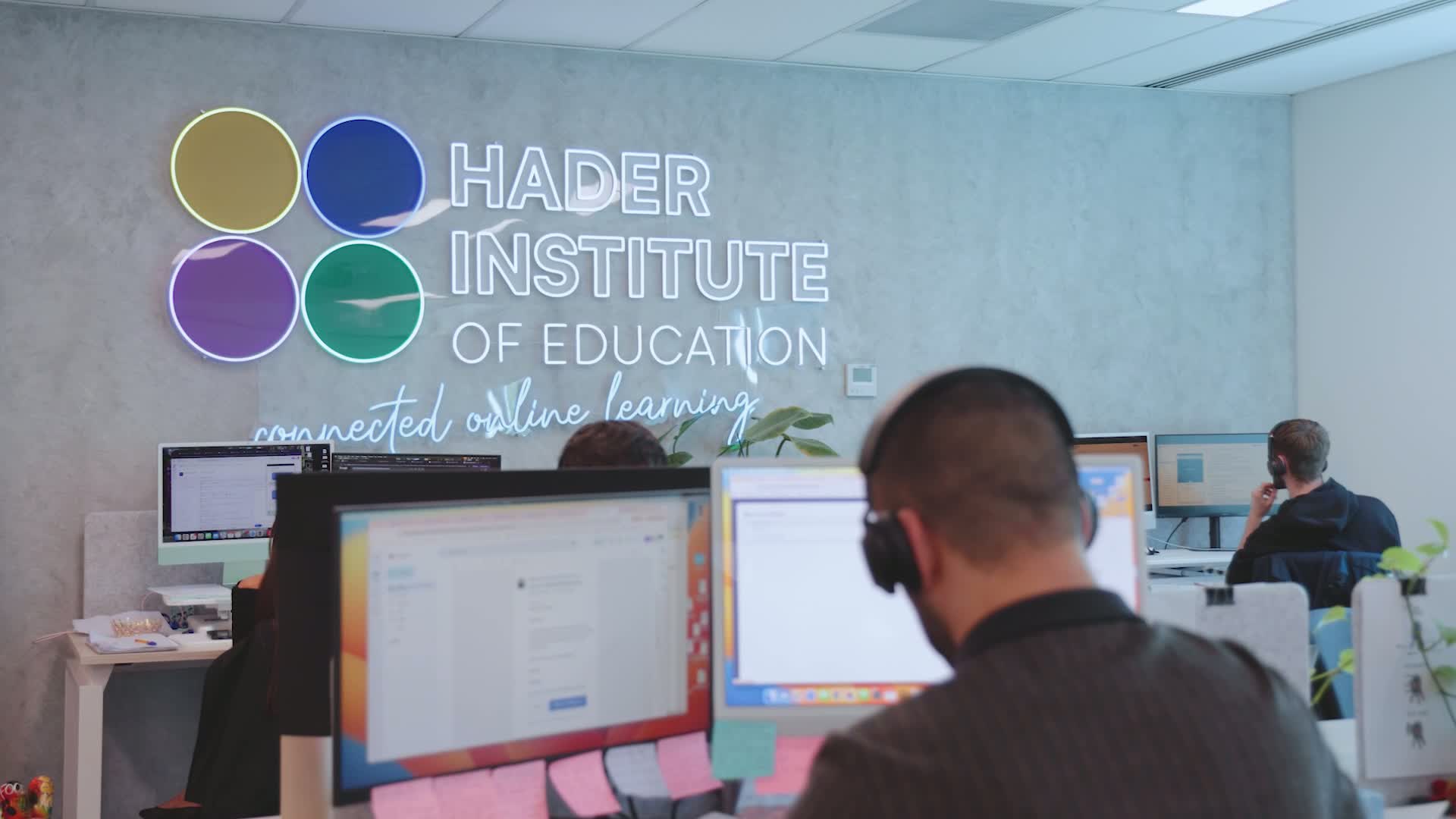
The CHC52025 Diploma of Community Services is a nationally recognised AQF Level 5 qualification delivered 100% online by Hader Institute of Education (RTO 45162). Over 17 months, learners develop skills in case management, service coordination, and community sector leadership across 20 units. This qualification supersedes the previous CHC52021 Diploma of Community Services. It includes 100 hours of guaranteed work placement and is the natural pathway to the CHC62015 Advanced Diploma of Community Sector Management. This qualification supersedes the previous CHC52021 Diploma of Community Services
Through this qualification, you will learn to:
- Deliver person centred and community focused support
Provide person centred support using case management, program delivery, counselling, and interventions across diverse community settings. - Recognise needs and provide practical support
Assess co existing needs, respond to crises, develop support plans, and guide clients through evidence informed services and referrals. - Promote cultural safety, inclusion, and respect
Apply culturally safe and trauma informed practice to support diverse communities and create respectful, inclusive service environments. - Apply legal, ethical, and professional frameworks
Ensure safe practice by meeting legal, ethical, privacy, duty of care, and reporting requirements that guide community service work. - Strengthen communication and relationships
Use advanced communication, interviewing, and collaboration skills to build trust and support effective professional partnerships.

Course Outcomes
Graduates of the CHC52025 Diploma of Community Services move into roles such as Case Manager, Community Services Coordinator, Team Leader, and Housing Manager, with salaries typically ranging from $75,000 to $95,000 per year. This nationally recognised qualification builds advanced skills in case management, advocacy, service coordination, leadership, and complex client support, opening pathways into leadership positions and further study.

Salary figures are indicative only, sourced from Seek (seek.com.au) and Jora (au.jora.com) June 2026. These figures are not a guarantee of earnings. Actual salaries vary based on employer, location, experience and qualifications.
For a more detailed career guide read our article on community services career paths.
Study Pathways
- Progress into community-sector management by studying the CHC62015 Advanced Diploma of Community Sector Management
Course Units
Core Units
CHCCCS004: Assess co-existing needs
This unit covers the skills and knowledge required to assess the co-existing needs of clients. It includes a review of assessment frameworks and tools, and an examination of how best to consider the impact of co-existing needs on service delivery.
This unit is important because it helps to ensure that co-existing needs are considered when providing services to clients. This can help to improve the overall service experience for clients and help to ensure that all of their needs are being met.
At the end of this unit, you will be able to:
- Understand the importance of assessing co-existing needs
- Review assessment frameworks and tools
- Consider how co-existing needs can impact service delivery
- Develop an action plan to address co-existing needs.
CHCCCS007 Develop and implement service programs
This unit describes the skills and knowledge required to develop, implement and review service programs in accordance with organisational requirements.
It applies to individuals who work under broad direction and take responsibility for their own work. They use discretion and judgement in planning, problem-solving and carrying out tasks. This unit also covers maintaining program quality.
CHCCCS019: Recognise and respond to crisis situations
This unit covers the skills and knowledge required to recognise and respond to crisis situations. It includes identifying signs of crisis, responding appropriately to the level of crisis, and providing support to people in crisis.
This unit is relevant to workers in a range of community, health and human service contexts who work directly with clients.
This unit is important because it will provide you with the skills and knowledge to recognise and respond to crisis situations. It is also important to be able to provide support to people who are in crisis.
On successful completion of this unit, you will be able to:
- Identify signs of crisis
- Respond appropriately to the level of crisis
- Provide support to people in crisis.
CHCCSM017: Facilitate and review case management (100 hours work placement)
This unit describes the performance outcomes, skills and knowledge required to plan, monitor and review case management.
Workers at this level work within organisational policies and procedures and may work autonomously or in consultation with supervisor or team leader.
This unit applies to work in a range of health and community services contexts.
CHCDEV005: Analyse impacts of sociological factors on people in community work and services
This unit of competency describes the performance outcomes, skills and knowledge required to analyse impacts of sociological factors when undertaking community work and associated services.
The unit describes the application of knowledge of the broad social and cultural context in which work is planned and implemented in the community services industry.
CHCDFV001: Recognise and Respond Appropriately to Domestic and Family Violence
This unit covers the knowledge and skills required to recognise and respond appropriately to domestic and family violence. This includes understanding the dynamics of domestic and family violence, identifying signs of domestic and family violence, and responding safely and effectively to disclosures of domestic and family violence.
Handling domestic and family violence is a complex task. This unit will give you the skills and knowledge to safely and effectively support people experiencing or at risk of domestic and family violence.
At the end of this unit, you will be able to:
- Understand the dynamics of domestic and family violence
- Identify signs of domestic and family violence
- Respond safely and effectively to disclosures of domestic and family violence
- Refer clients who disclose domestic and family violence to appropriate services.
CHCDIV001: Work with Diverse People
This unit describes the skills and knowledge required to work effectively with a range of diverse individuals, families, carers and/or communities.
It applies to workers who interface with diverse people as part of their job role. It includes interacting with people from diverse backgrounds in a range of contexts. It also includes having an awareness of own personal values, attitudes and beliefs and how these may impact working with diverse people.
At the end of this unit, students should be able to:
- Engage diverse individuals, families, carers and/or communities in a way that meets their needs promote their strengths and are culturally safe.
- Communicate with diverse individuals, families, carers and/or communities using methods and language that are appropriate to their needs.
- Promote the inclusion and participation of diverse individuals, families, carers and/or communities.
- Use effective interpersonal skills to support the development of respectful relationships with diverse individuals, families, carers and/or communities.
- Reflect on personal values, attitudes and beliefs and how they may impact working with diverse individuals
It applies to workers across a range of community work and services contexts who take responsibility for their own outputs within an established framework. They work under broad supervision and guidance from others.
CHCDIV002: Promote Aboriginal and/or Torres Strait Islander cultural safety
This unit describes the skills and knowledge required to promote Aboriginal and/or Torres Strait Islander cultural safety within own job role.
This unit applies to workers across a broad range of community service contexts who work collaboratively with Aboriginal and/or Torres Strait Islander people. They may work with Aboriginal and/or Torres Strait Islander individuals, families or communities in a direct service capacity or in an indirect service capacity.
Workers at this level maintain cultural safety by ensuring their own attitudes, knowledge, behaviours, and values do not judgementally affect service provision.
They work to ensure that the service environment and delivery are culturally safe for Aboriginal and/or Torres Strait Islander clients. This includes promoting the use of interpreters and other strategies to facilitate communication.
Workers may be required to provide leadership and guidance to others in promoting Aboriginal and/or Torres Strait Islander cultural safety.
This unit applies to workers across a range of community work and services contexts who take responsibility for their own outputs within an established framework. They work under broad supervision and guidance from others.
CHCLEG003: Manage legal and ethical compliance
This unit describes the skills and knowledge required to manage legal and ethical compliance within an organisation or specific service area.
It applies to individuals who are required to develop, implement and maintain organisational or service area policies and procedures to ensure compliance with legislative, regulatory and policy requirements.
At the end of this unit, students should be able to:
1. Develop, implement and maintain organisational or service area compliance policies and procedures
- Consult with relevant personnel to identify compliance risks and responsibilities
- Develop, implement and communicate organisational or service area compliance policies and procedures
- Regularly review compliance policies and procedures to ensure they are relevant and reflect any changes in legislation, regulations or organisational policy.
2. Monitor compliance with organisational or service area compliance policies and procedures
- Monitor organisational or service area compliance activities to identify potential breaches of compliance policies and procedures
- Report any potential breaches of compliance policies and procedures to the relevant personnel
3. Respond to breaches of organisational or service area compliance policies and procedures
- Investigate any potential breaches of compliance policies and procedures in accordance with organisational requirements
- Take appropriate corrective action in response to any actual breaches of compliance policies and procedures
- Review and update organisational or service area compliance policies and procedures in response to any identified gaps or weaknesses
4. Promote a compliance culture within the organisation or service area
- Encourage personnel to adopt and uphold organisational or service area compliance policies and procedures
- Model ethical and compliant behaviour in accordance with organisational values
- Provide training and development opportunities for personnel on their compliance responsibilities
- Communicate openly with personnel about compliance issues and encourage two-way feedback.
5. Keep abreast of changes in legislation, regulations and organisational policy
- Monitor changes in relevant legislation, regulations and organisational policy
- Ensure compliance policies and procedures are updated to reflect any changes in legislation, regulations or organisational policy
- Communicate any changes in compliance requirements to relevant personnel
6. Maintain records of compliance activities
- Maintain accurate and up-to-date records of compliance activities in accordance with organisational requirements
- Ensure confidential records are securely stored and accessed in accordance with organisational policy and procedures.
CHCMGT005: Facilitate workplace debriefing and support processes
This unit describes the skills and knowledge required to facilitate workplace debriefing and support processes following critical incidents.
This unit applies to workers who are required to provide debriefing and support following critical incidents in a range of community service contexts. The level of knowledge required is broad but does not extend to specialist skills.
By the end of this unit, students should be able to:
1. Prepare for debriefing
- Consult with relevant people to develop a debriefing plan
- Obtain required resources
2. Conduct debriefing
- Conduct debriefing in accordance with the plan
3. Follow up after debriefing
- Review debriefing process
- Identify improvements to the debriefing process
CHCPRP003: Reflect on and Improve Own Professional Practice
The unit reflects the role of workers who are engaged in applying a range of well-developed community service, case management and facilitation skills to work collaboratively with clients and other professionals. They may provide services in a range of community service contexts.
On completion of this unit, workers will have the skills and knowledge required to reflect on their own professional practice, to identify opportunities for improvement and make changes to enhance their effectiveness.
By the end of this unit, students should be able to:
1. Reflect on practice
- Evaluate own performance against relevant standards
- Identify areas of practice that need improvement
2. Seek feedback on practice
- Seek feedback from colleagues, clients and others on areas of practice that need improvement
3. Identify opportunities for improving practice
- Analyse feedback received to identify opportunities for improving practice
4. Implement improvements to practice
- Develop and implement a plan to improve own professional practice
5. Monitor and review changes to practice
- Monitor and review changes to own professional practice against the plan
HLTWHS003: Maintain work health and safety
This unit describes the skills and knowledge required to implement and monitor work health and safety (WHS) policies, procedures and work practices as part of a small work team.
This unit applies to workers who have a key role in maintaining WHS in an organisation, including duty of care for other workers.
Elective Units
CHCADV005: Provide systems advocacy services
This unit describes the skills and knowledge required to provide systems advocacy services.
It applies to workers who work within networks of organisations, or as part of an advocacy organisation.
They work autonomously and exercise judgement in selecting strategies to achieve desired outcomes.
Students will be required to:
- Develop and facilitate system advocacy: This involves identifying community needs, issues and concerns that can be addressed through system advocacy, developing system advocacy proposals in consultation with relevant stakeholders facilitating the development of partnerships and coalitions to progress system advocacy proposals, and advocating for system change to meet community needs.
- Promote system advocacy: this involves developing and implementing strategies to raise awareness of system advocacy among key stakeholders, using a range of strategies and media to promote system advocacy, and evaluating the effectiveness of promotional activities.
- Support individuals to engage in system advocacy: This involves Identifying and providing information and resources to individuals who want to engage in system advocacy, providing advice and support to individuals who want to engage in system advocacy, and advocating on behalf of an individual as required.
- Monitor and review system advocacy: This involves monitoring the progress of system advocacy in consultation with relevant stakeholders, evaluating system advocacy in consultation with relevant stakeholders, and making recommendations for improvement to system advocacy in consultation with relevant stakeholders.
CHCCSL001: Establish and confirm the counselling relationship
This unit describes the skills and knowledge required to establish and maintain a helping relationship with clients. This unit applies to workers who provide counselling services to clients in a range
This diploma of community services online course will provide you with the skills and knowledge to support clients, manage caseloads and work collaboratively with other professionals.
You will develop an understanding of human development and behaviour, learn how to apply counselling skills in a range of settings and explore ways to build respectful relationships.
Upon successful completion of this course unit, you will have the skills to:
- establish and maintain rapport with clients
- assess client needs
- develop case management plans
- work collaboratively with other professionals.
CHCCSL002: Apply specialist interpersonal and counselling interview skills
This unit describes the skills and knowledge required to conduct a specialist counselling interview with an individual or group.
This unit applies to workers who use highly developed interpersonal skills to conduct counselling interviews with clients in a range of community service contexts. They exercise considerable discretion and judgement in planning, conducting and evaluating the interview process
CHCDEV004: Confirm developmental status
This unit describes the performance outcomes, skills and knowledge required to review the developmental status of a child or a young person.
Work at this level may require guidance and supervision from appropriately qualified personnel, especially where provision of direct client services is involved.
This unit applies to people working in a range of community service contexts including juvenile justice, alcohol and other drugs services, mental health, and child protection.
CHCMHS007: Work Effectively in Trauma Informed Care
This unit will cover the knowledge and skills required to work effectively with people who have experienced trauma. It will provide an understanding of the impact of trauma on people's lives and how to work safely and therapeutically with people who have been affected by trauma.
This unit is relevant to workers in a range of community, health and human service contexts who work directly with clients.
This unit is important because it will provide you with the skills and knowledge to work effectively and safely with clients who have experienced trauma. It will also help you to understand how trauma can impact people's lives and how to work in a way that is supportive and therapeutic.
On successful completion of this unit, you will be able to:
- Understand the impact of trauma on individuals, families and communities
- Identify key principles of working with clients who have experienced trauma
- Work safely and effectively with clients who have experienced trauma
- Use a range of interventions to support clients who have
CHCMHS011: Assess and Promote Social, Emotional and Physical Wellbeing
This unit covers the skills and knowledge required to assess and promote the social, emotional and physical wellbeing of individuals experiencing mental health challenges. It includes understanding the interconnectedness of social, emotional and physical factors in mental health, identifying individual wellbeing needs and implementing strategies to enhance overall wellbeing. Learners will develop the ability to support clients by assessing their needs and promoting approaches that improve mental health outcomes through holistic, person-centred care.
This unit is crucial for workers who support individuals with mental health conditions. It equips workers with the skills to assess not only the emotional and mental aspects of wellbeing but also the social and physical dimensions, promoting an integrated approach to health and recovery. By learning to consider all aspects of an individual's health, workers can help create tailored support plans that contribute to a balanced and sustainable recovery journey.
Upon successful completion of this unit, you will be able to:
- Assess the social, emotional and physical wellbeing of individuals with mental health challenges
- Develop strategies to promote holistic wellbeing, including addressing the emotional, social and physical factors that impact recovery
- Collaborate with individuals to create person-centred wellbeing plans
- Identify and apply interventions that support positive wellbeing outcomes
- Monitor and review wellbeing strategies to ensure ongoing effectiveness and client satisfaction
CHCPOL003: Research and apply evidence to practice
This unit describes the skills and knowledge required to access and interpret mental health research and information and apply this evidence to clinical practice.
Evidence gathering is a necessary step in any clinical decision-making process. It allows practitioners to make informed decisions about the most appropriate assessment, diagnosis and treatment for individual clients.
The research findings that mental health practitioners use to inform their clinical decision-making can come from a range of sources, including scientific journals, government reports, community surveys and client case studies.
This unit applies to mental health practitioners who work independently and with other members of a multidisciplinary team. They work with clients who have mental health issues and disorders, and their families/carers.
CHCPRP001: Develop and maintain networks and collaborative partnerships
This unit describes the skills and knowledge required to develop and maintain networks and collaborative partnerships.
It applies to workers who work with young people in a range of contexts.
At the end of this unit, students should be able to:
1. Develop partnerships
- Determine purpose of developing partnerships
- Develop networks and linkages
- Identify potential partners
- Develop partnerships
2. Maintain partnerships
- Maintain networks and linkages
- Evaluate the effectiveness of partnerships
3. Develop collaborative relationships
- Develop collaborative relationships
- Implement collaborative relationships
4. Maintain collaborative relationships
- Maintain collaborative relationships
- Evaluate the effectiveness of collaborative relationships
5. Facilitate community participation
- Facilitate community participation
- Evaluate the effectiveness of community participation
6. Advocate for community development
- Advance the interests of community development
- Evaluate the effectiveness of advocacy activities
7. Foster community self-reliance
- Evaluate community needs
- Encourage community initiatives
- Evaluate the effectiveness of fostering community self-reliance

I’ve been studying with Hader Institute for the past year and am currently completing my Diploma in Youth Work. My experience so far has been nothing short of outstanding.I’ve had the absolute pleasure of having Viki as my lecturer. She consistently delivers rich, detailed education throughout our online classes. Viki is approachable, enthusiastic, and always eager to answer any question—never with judgment, always with encouragement.Hader Institute itself is incredibly supportive. They regularly check in with phone calls to see how I’m progressing and to offer any additional support I might need. That level of care is rare and genuinely appreciated.The learning environment is both supportive and informative. Compared to other institutions I’ve studied at, I can honestly say I’ve never felt so comfortable, accepted, and encouraged in an educational setting. The sense of being valued as a student makes a huge difference.Highly recommend Hader Institute to anyone looking to further their education in a welcoming and empowering environment.

I'm really glad I chose to study at Hader. A big shoutout to my lecturer Blake for being so encouraging and always taking the time to explain things clearly. Also, thank you to the learner support team, they’ve been super helpful whenever I needed a hand

I’ve been working in Community Services for the past six years. I got into this work because I love helping people, not because of my studies. When I finally decided to study, I spent a lot of time looking for the best option that would fit my life. I was working full-time as a youth worker, married, and had a newborn at home. I couldn’t go to face-to-face classes, so studying online was my only choice.I’m over 40 and hadn’t studied in more than 20 years, so starting again was really hard. Learning how to use a new website, understanding how the classes and assessments worked, and even things like what “RPL” meant were all new to me. After a long week at work, keeping up with classes felt overwhelming. I think it’s tough for any adult to go back to studying after so long.Even though it was a big challenge, the Hader Institute supported me all the way. They guided me, kept me on track, and made me feel like I was part of something. But the real difference for me was Viki Hannah. Her kindness, patience, and encouragement really helped me move forward. She saw the experience I already had and helped me believe in myself during some really hard times. I feel like I found a mentor without even looking for one — and that’s something special.I truly hope I can keep in touch with Viki, and it’s good to know I can always reach out to Hader Institute again if I ever need support.

Viki Hannah was an absolute great help to me during my course, provided me with one on one support every week to help me get through all my roleplay assessments, I alway felt that Viki went out of her way to make sure that I was supported in every way that I needed to be able to complete my study.had a great experience during my final work placement observation. Charlotte’s instructions to help me prepare for the assessment were very clear and helpful, and she also supported me with a job I am applying for. I’m very grateful for the guidance and support I received from Hader Institute of Education!

My Trainer was Viki Hannah, what I liked most about our work together in classes and assessment support was how approachable and supportive you were. You always explained things clearly and took the time to make sure I understood, especially when I felt unsure about certain parts of the work. Your encouragement really helped boost my confidence. You made a real positive difference to my experience. For example, during my assessment preparation, you gave really helpful one-to-one guidance that made the tasks feel more manageable. I felt more organised and motivated because of your help. Thank you

A great place to study with, and a massive thank you to Cayan! An absolute awesome educator with sound knowledge and always happy to go above and beyond to get his students across the line. A top bloke as well. Couldn't be happier with the way he conducts himself professionally.

I want to thank Hader for hearing my special need's for my cert 4 AOD course and connecting me with Viki Hannah.Viki has dedicated her time with me to answer any concerns and question's regarding my studies. Viki has always been attentive to help me understand where I may be having trouble understanding. Viki does this by using her amazing skills in communication, compassion, empathy, experience and wisdom.I would also like to thank the amazing Duane for doing the same while facilitating our weekly 3 hour class. Hader has a great team of dedicated people and I feel happy that I chose Hader.

The best staff and study experience. Really positive environment and helping nature of everyone listening to the queries and everything. I am glad I made the right decision. My trainer Viki is the most supportive and emotionally intelligent woman. She is someone you can always rely upon.

My experiences with Hader has been wonderful and they have made me feel right at home in my studies in cert IV mental health.Cayan has been the teacher for our Wednesday night classes and he has been amazing in his delivery of the units we have completed and is always readily available with any help or advice we need.He is a very valued part of the institute of education and comes highly recommended.I would also like to give a shout out to Vicki who has been ready to answer any queries I have had and provide any extra guidance I have needed.My Initial contact person Sasha was amazing in explaining the ins and out of the course structures and so on and is also always available to answer any of my questions.I have also had conversations with Mika, a learning support officer who has been, and is a treasure trove of information and has been a fantastic support throughout.Whether you are starting out your education journey or trying to get back into the workforce in a second career through further learning, Hader Institute has you covered in all angles and will ensure you succeed in whichever career path you choose.Best wishesMartin O'Connor

I am delighted to provide a referral based on my experience studying with the Hader Institute. After much contemplation, I began my studies in late October, enrolling in the Certificate IV in Alcohol and Other Drugs (AOD). At the age of 55, I initially worried that I might be “too old” to return to education. To my surprise and delight, I’ve nearly completed my first course and have even progressed to the AOD Diploma.Choosing the right educational institution was a significant decision for me. The affordability of Hader’s fees and the flexible content delivery were key factors that made it stand out. I’ve found the option to attend Duane’s incredibly informative online classes when needed invaluable, while also having the freedom to request extra modules so I can study at my own pace.The support I’ve received from the trainers has been exceptional. Mika, in particular, has been wonderfully encouraging, and Sasha’s patience and wealth of knowledge have made navigating my studies much easier, even as I ask countless questions. As someone who isn’t particularly comfortable with technology, I’ve also greatly appreciated the simplicity and user-friendliness of the Axcelerate portal—it’s been such a relief.Embarking on this journey was a big decision, but I am now immensely grateful that I chose Hader Institute. The support, flexibility, and resources provided have made all the difference, and I’m thrilled with the progress I’ve made so far.

I’ve been studying with Hader Institute for the past year and am currently completing my Diploma in Youth Work. My experience so far has been nothing short of outstanding.I’ve had the absolute pleasure of having Viki as my lecturer. She consistently delivers rich, detailed education throughout our online classes. Viki is approachable, enthusiastic, and always eager to answer any question—never with judgment, always with encouragement.Hader Institute itself is incredibly supportive. They regularly check in with phone calls to see how I’m progressing and to offer any additional support I might need. That level of care is rare and genuinely appreciated.The learning environment is both supportive and informative. Compared to other institutions I’ve studied at, I can honestly say I’ve never felt so comfortable, accepted, and encouraged in an educational setting. The sense of being valued as a student makes a huge difference.Highly recommend Hader Institute to anyone looking to further their education in a welcoming and empowering environment.
I'm really glad I chose to study at Hader. A big shoutout to my lecturer Blake for being so encouraging and always taking the time to explain things clearly. Also, thank you to the learner support team, they’ve been super helpful whenever I needed a hand
I’ve been working in Community Services for the past six years. I got into this work because I love helping people, not because of my studies. When I finally decided to study, I spent a lot of time looking for the best option that would fit my life. I was working full-time as a youth worker, married, and had a newborn at home. I couldn’t go to face-to-face classes, so studying online was my only choice.I’m over 40 and hadn’t studied in more than 20 years, so starting again was really hard. Learning how to use a new website, understanding how the classes and assessments worked, and even things like what “RPL” meant were all new to me. After a long week at work, keeping up with classes felt overwhelming. I think it’s tough for any adult to go back to studying after so long.Even though it was a big challenge, the Hader Institute supported me all the way. They guided me, kept me on track, and made me feel like I was part of something. But the real difference for me was Viki Hannah. Her kindness, patience, and encouragement really helped me move forward. She saw the experience I already had and helped me believe in myself during some really hard times. I feel like I found a mentor without even looking for one — and that’s something special.I truly hope I can keep in touch with Viki, and it’s good to know I can always reach out to Hader Institute again if I ever need support.
Viki Hannah was an absolute great help to me during my course, provided me with one on one support every week to help me get through all my roleplay assessments, I alway felt that Viki went out of her way to make sure that I was supported in every way that I needed to be able to complete my study.had a great experience during my final work placement observation. Charlotte’s instructions to help me prepare for the assessment were very clear and helpful, and she also supported me with a job I am applying for. I’m very grateful for the guidance and support I received from Hader Institute of Education!
My Trainer was Viki Hannah, what I liked most about our work together in classes and assessment support was how approachable and supportive you were. You always explained things clearly and took the time to make sure I understood, especially when I felt unsure about certain parts of the work. Your encouragement really helped boost my confidence. You made a real positive difference to my experience. For example, during my assessment preparation, you gave really helpful one-to-one guidance that made the tasks feel more manageable. I felt more organised and motivated because of your help. Thank you
A great place to study with, and a massive thank you to Cayan! An absolute awesome educator with sound knowledge and always happy to go above and beyond to get his students across the line. A top bloke as well. Couldn't be happier with the way he conducts himself professionally.
I want to thank Hader for hearing my special need's for my cert 4 AOD course and connecting me with Viki Hannah.Viki has dedicated her time with me to answer any concerns and question's regarding my studies. Viki has always been attentive to help me understand where I may be having trouble understanding. Viki does this by using her amazing skills in communication, compassion, empathy, experience and wisdom.I would also like to thank the amazing Duane for doing the same while facilitating our weekly 3 hour class. Hader has a great team of dedicated people and I feel happy that I chose Hader.
The best staff and study experience. Really positive environment and helping nature of everyone listening to the queries and everything. I am glad I made the right decision. My trainer Viki is the most supportive and emotionally intelligent woman. She is someone you can always rely upon.
My experiences with Hader has been wonderful and they have made me feel right at home in my studies in cert IV mental health.Cayan has been the teacher for our Wednesday night classes and he has been amazing in his delivery of the units we have completed and is always readily available with any help or advice we need.He is a very valued part of the institute of education and comes highly recommended.I would also like to give a shout out to Vicki who has been ready to answer any queries I have had and provide any extra guidance I have needed.My Initial contact person Sasha was amazing in explaining the ins and out of the course structures and so on and is also always available to answer any of my questions.I have also had conversations with Mika, a learning support officer who has been, and is a treasure trove of information and has been a fantastic support throughout.Whether you are starting out your education journey or trying to get back into the workforce in a second career through further learning, Hader Institute has you covered in all angles and will ensure you succeed in whichever career path you choose.Best wishesMartin O'Connor
I am delighted to provide a referral based on my experience studying with the Hader Institute. After much contemplation, I began my studies in late October, enrolling in the Certificate IV in Alcohol and Other Drugs (AOD). At the age of 55, I initially worried that I might be “too old” to return to education. To my surprise and delight, I’ve nearly completed my first course and have even progressed to the AOD Diploma.Choosing the right educational institution was a significant decision for me. The affordability of Hader’s fees and the flexible content delivery were key factors that made it stand out. I’ve found the option to attend Duane’s incredibly informative online classes when needed invaluable, while also having the freedom to request extra modules so I can study at my own pace.The support I’ve received from the trainers has been exceptional. Mika, in particular, has been wonderfully encouraging, and Sasha’s patience and wealth of knowledge have made navigating my studies much easier, even as I ask countless questions. As someone who isn’t particularly comfortable with technology, I’ve also greatly appreciated the simplicity and user-friendliness of the Axcelerate portal—it’s been such a relief.Embarking on this journey was a big decision, but I am now immensely grateful that I chose Hader Institute. The support, flexibility, and resources provided have made all the difference, and I’m thrilled with the progress I’ve made so far.
Application Process

Step 1: Apply
Complete a Pre-Enrolment Application over the phone with our Admissions Team, or online via our website by clicking the “Apply Now” button.

Step 2: Assessment
Take a short Online Literacy and Numeracy Quiz to assess your current skills and ensure the right level of support throughout your studies.

Step 3: Pre-Training Interview
Join a quick Orientation Call with our team to confirm your eligibility requirements, availability, and acceptance into your chosen course.

Step 4: Acceptance
Once accepted, you’ll receive your Letter of Acceptance along with your login details to access our online learning platform and commence your studies.
Course Fees and Payment Options

To ensure that learners can fully participate in the course and meet all requirements, the following entry conditions apply:
- Be at least 18 years of age.
- Must be an Australian citizen, a permanent resident, or hold a visa with full work and study rights.
- Have completed a Language, Literacy and Numeracy (LLN) assessment via the LLN Robot platform and met the Australian Core Skills Framework (ACSF) Level 4 standard prior to enrolment.
- Have a valid Unique Student Identifier (USI), or be willing to obtain one.
- Have sound computer skills, including:
- Ability to navigate software systems.
- Intermediate use of Microsoft Word (formatting, tables, editing) to complete assessments.
- Have access to a laptop or desktop computer with a reliable internet connection to complete online modules and attend virtual Zoom classes and participate in assessor-led role-play assessments via Zoom. Full minimum system requirements, including operating system, RAM, and browser specifications, are available on the Hader Institute of Education website and in your Learner Handbook.
- Be capable of completing 100 hours of work placement in a suitable workplace.
- Have a valid Working with Children Check (or equivalent) prior to placement.
- Depending on your placement workplace, you may need an NDIS Worker Screening Check. If required, your placement workplace will provide you with its Employer ID so you can complete your application before starting placement.
- Hold a valid Police Check (or be willing to obtain one before placement).
- Complete a Pre-Training Review interview (via phone) to confirm eligibility and readiness to undertake the course.
Learning is delivered through a flexible blended model that supports different learning preferences. You will experience:
- Live online classroom sessions for real-time interaction with trainers
- Self-guided online study so you can progress at your own pace
- Practical skills development activities
- A structured 100-hour work placement
The program runs for 73 weeks (17 months) and is designed to be self-paced for learners who need flexibility. Read more about studying community services online.
At Hader Institute of Education, learners are supported by our trainers and a dedicated Learner Support Officer. Support includes:
- Weekly live Zoom sessions with your trainer.
- One-on-one mentoring sessions monthly via Zoom or phone.
- Trainer support with responses within 72 hours on business days (Monday to Friday).
- Monthly outreach calls from the Learner Support Department.
- Employment assistance through our Job-Ready Program.
These services are designed to help you feel confident, connected, and ready to succeed throughout your course.
The assessment is conducted using a combination of realistic workplace tasks, projects, knowledge tests, response to case studies and feedback from supervisors. The following provides a brief explanation of the assessment methods that are to be applied: Written tasks; Case Study; Practical Activities and Demonstrations; Work Placement. You will also complete approximately 18 role plays to demonstrate your practical skills, including 4 assessor-led role plays and 14 non-assessor-led role plays based on realistic workplace scenarios.
Is work experience required for the diploma of community services?
Yes, all learners will be required to complete a total of 100 hours of work placement as part of the Diploma of Community Services. Learners will be placed in an organisation relevant to their chosen field of study.
This work placement will give Learners the opportunity to put their theoretical knowledge into practice and gain valuable industry experience.
Is there a Diploma of Case Management?
There’s no standalone nationally recognised Diploma of Case Management in Australia. Case management is delivered within the Diploma of Community Services, which includes the core unit CHCCSM017 (Facilitate and Review Case Management) and a 100-hour supervised work placement. Graduates work in roles such as case manager, community services coordinator and team leader. It’s the qualification to study if you want to move into case management.
What is case management?
Case management is a collaborative process where a worker assesses a person’s needs, then plans, coordinates and reviews the services and support they require to reach agreed goals. In community services it helps people with complex or multiple needs navigate health, housing, financial and social support, with the case manager acting as their central point of contact. You develop these skills in the Diploma of Community Services through the unit CHCCSM017.
What jobs can I get with a Diploma of Community Services in Australia
The CHC52025 Diploma of Community Services qualifies graduates for roles as Case Managers, Community Services Coordinators, Housing Managers, Team Leaders, Family Services Coordinators, Community Care Managers, Disability Team Leaders, Outreach Workers, and Homelessness Services Managers. Roles exist across NDIS, government, NFP, housing, and aged care sectors throughout Australia. Entry-level salaries start around $70,000, with senior coordination roles reaching $95,000.
How much can you earn with a Diploma of Community Services?
Diploma of Community Services graduates in Australia typically earn between $70,000 and $95,000 a year, depending on role, employer, and state. Case Managers and Team Leaders at NFP and government agencies tend to sit between $75,000 and $90,000. Housing Managers and Senior Coordinators can reach $95,000 or above. The CHC52025 is the minimum qualification for most coordination and team leadership roles in the sector.
What's the difference between the Diploma vs Cert IV vs Bachelor?
The CHC52025 Diploma of Community Services is a 17-month, AQF Level 5 qualification; the most common pathway into coordination and team leadership in community services. A Cert IV (AQF Level 4, 12 months) is the entry-level professional credential. A Bachelor of Social Work (AQF Level 7, 4 years at university) is the pathway to clinical or policy-level roles. The Diploma is the practical middle ground most professionals choose.
What is the difference between the CHC52025 Diploma of Community Services and the Bachelor of Social Work?
The CHC52025 Diploma of Community Services is an AQF Level 5 VET qualification completed in 17 months, the standard credential for case management, coordination, and team leadership roles in community services. A Bachelor of Social Work is an AQF Level 7 university degree taking 4 years, covering a broader social work scope and leading to accredited social worker roles. Both pathways lead to professional human services careers; the Diploma is the faster, lower-cost route into community services coordination and leadership, and can also serve as a stepping stone into university study.
Comparison data is general and current as of July 2026. AQF levels are sourced from the Australian Qualifications Framework (aqf.edu.au). Bachelor of Social Work duration, placement hours, and accreditation reflect the Australian Association of Social Workers (aasw.asn.au). This comparison is a general guide to help you explore your options, and our team is here to talk through the path that best suits your goals.
Is this CHC52025 Diploma of Community Services right for you?
The CHC52025 Diploma of Community Services is purpose-built for experienced professionals ready to lead the sector in delivering safe, inclusive, and person-centred services. This advanced qualification is ideal if you:
• Are driven to coordinate services and programs that create positive, long-term change for individuals and communities.
• Already work or volunteer in community services and want to formalise your experience to transition into senior roles.
• Aim to step up into high-impact positions, such as case management, service coordination, or team leadership.
• Champion industry best practices, advanced cultural awareness, and high levels of professional responsibility.
• Seek a high-calibre learning experience that respects your industry background while providing the guidance needed to elevate your career.
How long and how you'll study the CHC52025 Diploma of Community Services?
The CHC52025 Diploma of Community Services is delivered 100% online, combining weekly live Zoom training with industry-experienced trainers, self-paced study, monthly one-on-one mentoring, and 100 hours of guaranteed work placement coordinated through Hader's placement partner, SkilTrak. Assessment includes written tasks, case studies, projects, workplace activities, and simulated learning. Here is your recommended learning hours breakdown to help you stay on track throughout the qualification.
Is a Diploma in Community Services worth it?
Yes. For learners aiming for coordination, team leadership, or specialist case management roles, the CHC52025 Diploma of Community Services is a nationally recognised AQF Level 5 qualification that prepares graduates for roles such as Case Manager, Team Leader, Housing Manager, and Community Services Coordinator, with salaries commonly ranging from $70,000 to $95,000. It also provides a pathway into the CHC62015 Advanced Diploma of Community Sector Management.
What jobs can I get with a Diploma of Community Services in Australia?
The CHC52025 Diploma of Community Services prepares graduates for roles including Case Manager, Community Services Coordinator, Housing Manager, Team Leader, Family Services Coordinator, Community Care Manager, Disability Team Leader, Outreach Worker, and Homelessness Services Manager. Opportunities exist across government, NDIS, aged care, housing, and not-for-profit organisations throughout Australia.
How much can you earn with a Diploma of Community Services?
Graduates of the CHC52025 Diploma of Community Services typically earn between $70,000 and $95,000 per year, depending on their role, employer, location, and experience. Case Managers, Team Leaders, and Community Services Coordinators commonly earn between $75,000 and $90,000, while senior coordination and management roles may exceed $95,000.
Salary figures are indicative only, sourced from Seek (seek.com.au) and Jora (au.jora.com) July 2026. These figures are not a guarantee of earnings. Actual salaries vary based on employer, location, experience and qualifications.
Is the Diploma of Community Services government funded or free?
It can be. The Diploma of Community Services may be eligible for government funding through Free TAFE or state subsidy programs, but only when completed through a government TAFE or an approved contracted provider.
As Hader Institute of Education is a private online education provider, our courses are not eligible for government subsidies or VET Student Loans (VSL). However, we are committed to making education accessible.
The course fee is $7,995, or $7,195.50 when paid upfront with a 10% discount. We also offer flexible, interest-free payment plans starting from just $77 per week, helping you manage the cost in a way that suits your budget.
To learn more about how Free TAFE and state subsidies work, and how the costs compare, read our full guide: Are community services courses government funded?
How long does the Diploma of Community Services take at Hader?
The CHC52025 Diploma of Community Services at Hader Institute of Education takes 17 months (73 weeks) to complete. It is delivered 100% online and includes weekly live Zoom sessions, self-paced learning, monthly one-on-one mentoring, and 100 hours of guaranteed work placement organised through Hader's placement partner, SkilTrak, within 30 km of your home where possible.
Course Outcomes & Recognition
Why Study at Hader Institute of Education?
We believe in a future where everyone feels included, connected, valued and belongs. We’re in business to empower people to help each other on their paths to discovery and transformation.

Nationally Recognised Training
All our Certificate and Diploma courses are nationally recognised. Some short courses are built on nationally recognised units of competency leading to a statement of attainment.

Structured Online Learning
Learn anywhere, anytime, and at your own pace with our online courses — plus access to weekly virtual teaching sessions, recorded lectures, and exclusive masterclasses with industry professionals.

Work Placement Guaranteed
We offer work experience placement through our partner Skiltrak, a pioneer in blending personalised placement opportunities and professional development.

Job Search Assistance
From the moment you commence your studies, we'll help you with resume polishing, cover letters and finding the right role.
The Heart of Who We Are
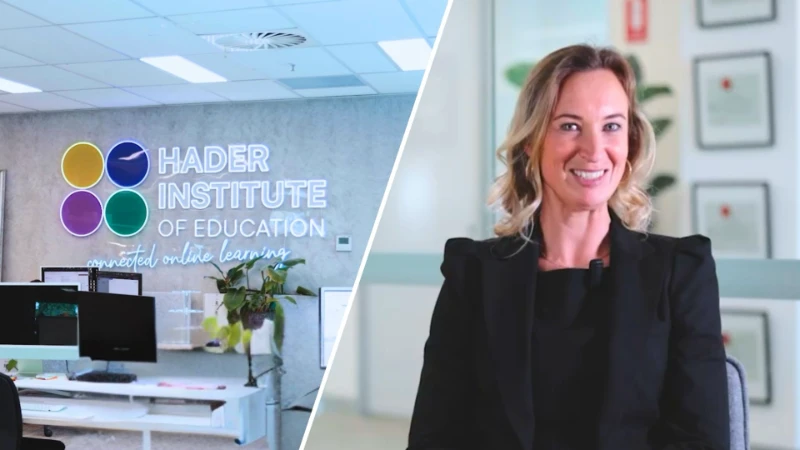
A community that believes in empowering learners and transforming lives of learners through education.
Online trainers & assessors
Our online trainer & assessors are qualified, dedicated professionals who have current industry experience and qualifications in a range of industries. Their industry experience is continually up to date by participating in professional development activities, therefore giving our learners the best practical industry experience.
Driven by a passion for lifelong learning and the belief that “To Inform is To Empower.”
Driven by a commitment to compassionate care, lifelong learning, and evidence-based practice that empowers positive change.
Driven by a passion for education, community development, and lifelong learning that creates positive opportunities.
Developing confident leaders who don’t just meet standards, they elevate them.
Leading with Heart, Driving with Purpose
Empowering Individuals, Transforming Communities
Leading with Integrity, Empowering Through Action
Grounded in Experience, Driven by Compassion
Grounded in Experience, Rich in Knowledge, and a Heart Full of Care and Compassion for Every Learner
Committed to providing high-quality training grounded in well-being, compassion, and inclusion.
Related Courses

Advanced Diploma of Community Sector Management

Certificate IV in Chaplaincy and Pastoral Care

Community Services Short Course

Certificate IV in Community Services

Crisis Intervention and Motivational Interviewing Short Course